Stop Buying $4 Clamshells: The Real Math Behind Your Windowsill Herb Garden
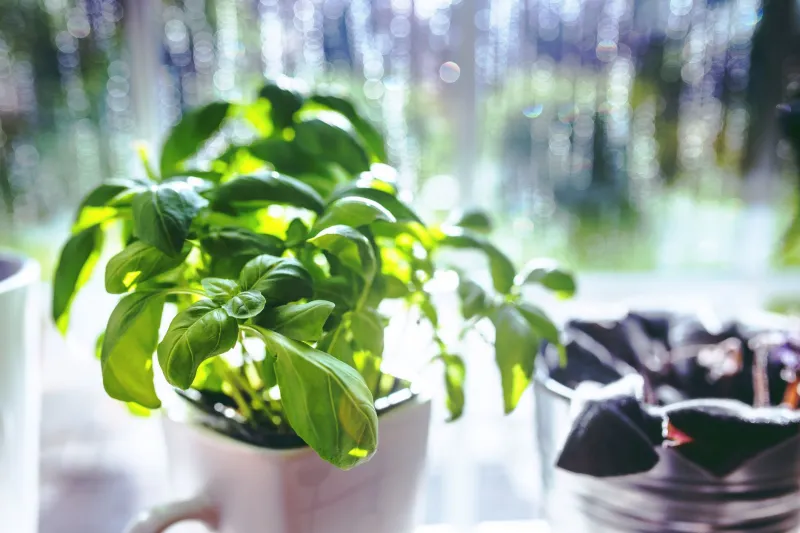
There's a particular kind of heartbreak that happens at the grocery store produce aisle. You're standing there, holding a plastic clamshell of basil that contains approximately nine leaves and costs $3.99, and you think: I could grow this.
You're right. You could. But not every herb deserves a spot on your windowsill, and some of them are quietly costing you more than they'll ever give back. So we did what any reasonable plant blog would do — we broke out a spreadsheet, hit three different grocery chains, and ran the numbers on the most popular kitchen herbs in America.
Here's what we found.
The Setup: What We Counted
To keep this fair, we compared each herb over a full growing season (roughly 4–6 months on a sunny US kitchen windowsill). The math includes:
- Startup costs: seeds or starter plants, a pot, and potting mix
- Ongoing costs: fertilizer (a diluted organic feed), occasional replacement soil
- Yield: conservative estimates, because let's be honest, we all forget to water sometimes
We compared everything against the price of fresh packaged herbs at typical US grocery prices — think Kroger, Safeway, or your local equivalent — where a 0.5-ounce clamshell of basil or mint runs between $2.50 and $4.50 depending on the season and your zip code.
The Winners: Herbs That Actually Pay You Back
Basil — the undisputed champion. A $2.50 packet of seeds (or a $3.50 starter from a garden center) plus a $2 pot of soil can yield a genuinely absurd amount of basil if you pinch it back regularly. A single healthy plant produces harvestable leaves every week or so for months. Over a season, you're looking at the equivalent of 10–15 clamshells — call it $30–$50 in grocery savings for under $10 invested. Bonus: homegrown basil actually tastes better, because it hasn't been sitting in a refrigerated truck since Tuesday.
Mint — almost unfair. Mint grows like it's trying to take over your kitchen, which is exactly why you should confine it to a pot. One $4 starter plant will produce more mint than most households can use for mojitos, tea, and fruit salads. The catch? Its abundance means you'll save money only if you actually use mint. If it's an occasional garnish, the grocery clamshell might be the lazier (and cheaper) call.
Chives — the slow burn. Chives take a while to establish, but once they're going, they're nearly indestructible and regrow after every snip. A $3 seed packet becomes a perennial snipping station for years. Cost-per-harvest drops close to zero by year two.
The Middle Ground: Nice, But Not Exactly Profitable
Parsley is slow to germinate (two to three weeks of staring at bare soil) and yields modestly. You'll roughly break even over a season. Grow it if you cook with it constantly; skip it if you don't.
Cilantro is the heartbreaker of the windowsill world. It bolts — flowers and turns bitter — the moment your kitchen gets warm, which is basically always. You might get two or three decent harvests before it calls it quits. Unless you're making taco night a weekly institution, buying it is often less frustrating.
The Decorative Dreamers
Dill and rosemary round out the bottom of the ledger. Dill is leggy, floppy, and bolts faster than cilantro. Rosemary is a slow-growing Mediterranean shrub that wants full sun and sharp drainage — conditions most US kitchens can't fake in winter. Both are lovely plants. Neither will earn their keep in a small windowsill economy.
Your DIY Herb Audit: The Five-Minute Spreadsheet
Want to run this on your own windowsill? Open a spreadsheet and make five columns:
- Herb name
- Total cost to grow (seeds/plant + pot + soil + fertilizer)
- Estimated harvests per season (be honest — count the ones you'll actually remember to water)
- Clamshell price (check your local grocery)
- Break-even point (column 2 ÷ column 4 = number of harvests to pay for itself)
Then apply one final filter: Do I use this herb at least twice a week? If the answer is no, even a mathematically profitable herb is just a green pet eating fertilizer and goodwill.
The Real Bottom Line
A four-herb windowsill garden — basil, mint, chives, and one wildcard — costs about $25 to start and can realistically replace $60–$100 of grocery-store herbs in a single growing season. That's not life-changing money, but it's real, it tastes better, and every snip is one less plastic clamshell heading to a landfill.
Not bad for a corner of your kitchen that was previously hosting a sad succulent and a stack of mail.