The $500 Plant That Dies Just as Fast as the $5 One: What Growers Won't Tell You About Variegated Everything
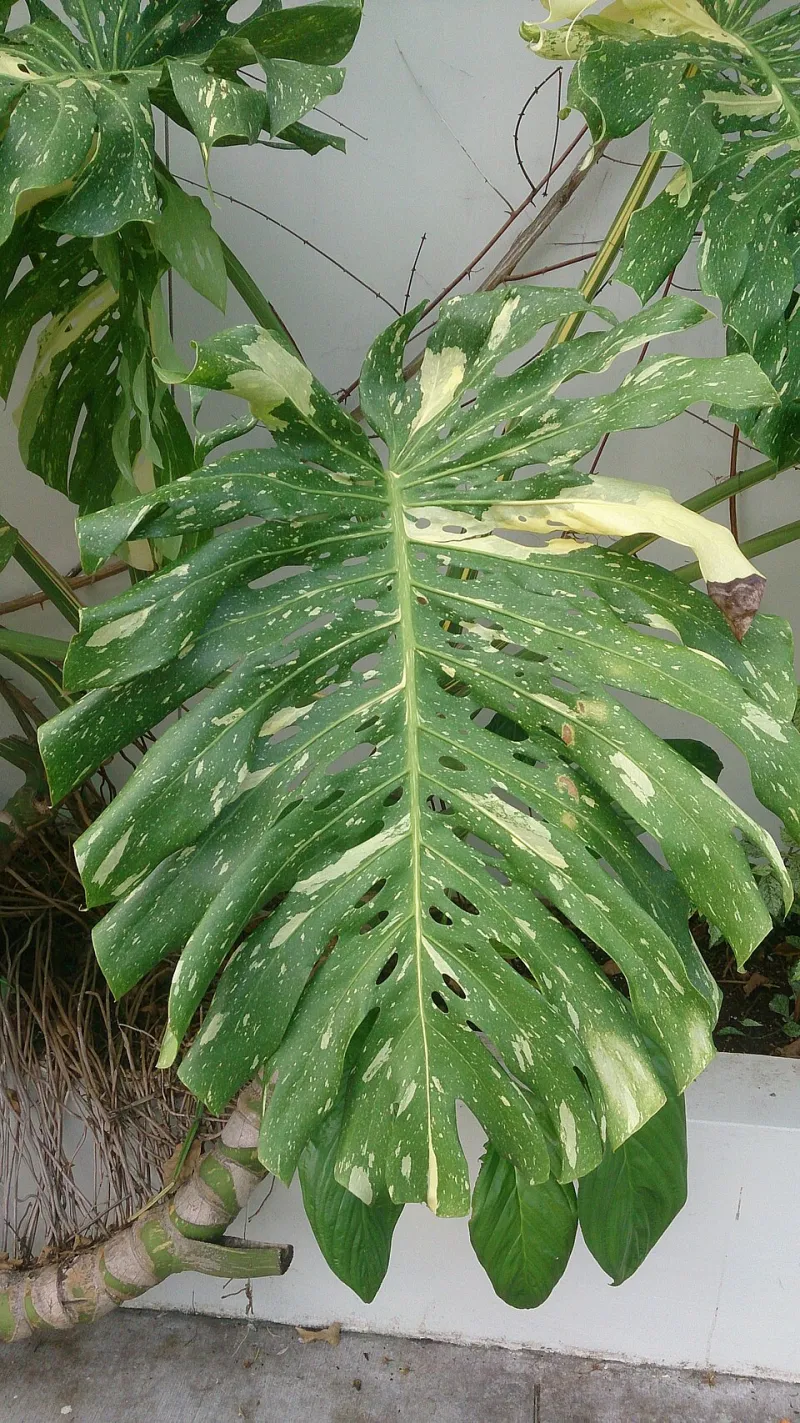
Photo: Mokkie, CC BY-SA 3.0, via Wikimedia Commons
Somewhere in America right now, someone is paying $800 for a monstera with white streaks on its leaves. That same $800 could buy roughly 160 healthy pothos plants. One hundred and sixty. Enough to line every windowsill in a three-story house and still have change left for a nice bag of potting soil.
If that math makes your eye twitch a little, good. Stick around.
What You're Actually Paying For
Let's clear up a common misconception first: variegation — those striking white, cream, or yellow patches on otherwise green leaves — isn't a sign of a superior plant. It's closer to a flaw. Variegated sections of a leaf have little to no chlorophyll, which means they can't photosynthesize. The plant is literally running its food production with a handicap.
That's why variegated plants tend to grow slower, need brighter light, and occasionally "revert," shooting out all-green leaves that erase the very pattern you paid a premium for. You're not buying a superplant. You're buying a plant with a genetic quirk that makes it needier.
So why the eye-watering prices? Basic supply and demand, turbocharged by social media. When growers can only propagate so many cuttings a year — and when every plant flipper on Instagram is showing off their latest "unicorn" — scarcity does the rest.
The Propagation Bottleneck
Here's where a little insider knowledge helps. Most trendy variegated plants can't be reliably grown from seed. They're multiplied through cuttings and tissue culture, and variegated cuttings root slowly and fail often. A grower might lose a meaningful percentage of every batch before a single saleable plant exists.
That overhead gets baked into the price tag, and honestly, growers deserve fair compensation for their labor. But the market doesn't stop at "fair." When demand spikes — as it did wildly during the pandemic houseplant boom — prices on rare variegata can detach entirely from what the plant costs to produce. Auction listings for a single philodendron cutting have hit four figures. For a cutting.
The good news for your wallet: those bubbles deflate. Prices on several once-impossible variegated plants have already dropped sharply as tissue culture labs scaled up. The person who paid $1,500 in 2021 is watching the same plant sell for under $100 today. Ouch.
The Case for the Humble Classics
Now for the part nobody puts on a mood board: the "boring" plants.
Pothos, snake plants, spider plants, heartleaf philodendrons — these are the workhorses of the houseplant world for a reason. They've been passed along in cuttings between friends and grandmothers for generations precisely because they're forgiving, adaptable, and nearly impossible to kill through ordinary neglect. A pothos tolerates low light, inconsistent watering, and that one corner of your apartment that never gets direct sun.
And here's the sustainability angle that rarely gets discussed: the thriftiest houseplants are often the greenest ones. A $6 pothos from your local hardware store has a fraction of the production footprint of a lab-propagated rarity shipped across the country in climate-controlled packaging. Better yet, classics are easy to propagate yourself — one healthy pothos becomes five with nothing but scissors, a jar of water, and a little patience. That's the ultimate low-impact plant habit: never buying new at all.
There's also a resilience dividend. When your $8 snake plant eventually meets its maker (it happens to everyone), you shrug, compost it, and move on. When your $600 investment crisp up because your heater ran dry one weekend in February, that's a genuinely painful loss — financially and emotionally. Expensive plants can make caring for them feel stressful instead of joyful, and stress is a lousy foundation for a hobby.
How to Spend Less and Grow More
If you love the variegated look — and hey, it's gorgeous, no judgment — there are smarter routes to it:
- Buy the accessible versions. Variegated pothos varieties like 'Marble Queen' and 'N'Joy' give you that creamy, splashy look for under $15. Same aesthetic energy, none of the financial drama.
- Shop local, not viral. Neighborhood plant shops and garden center clearance racks often have healthy plants at a fraction of online auction prices, without the shipping stress.
- Trade cuttings. Plant swap groups on Facebook and at local libraries are thriving across the US. Your extra spider plant babies are someone else's treasure.
- Wait out the hype. Today's unicorn is often next year's clearance bin resident. Patience is the cheapest fertilizer there is.
The Bottom Line
Your grandma's pothos didn't survive decades because it was lucky. It survived because it was chosen well, watered occasionally, and never treated like a stock portfolio. The most sustainable plant collection isn't the one full of rare specimens — it's the one full of plants you actually keep alive, propagate freely, and enjoy without anxiety.
Grow what thrives in your home, not what trends on your feed. Your wallet, your windowsills, and honestly your grandma will all approve.