That Heat Vent Is Cooking Your Fern: Winter's Double Whammy on Plants and Power Bills
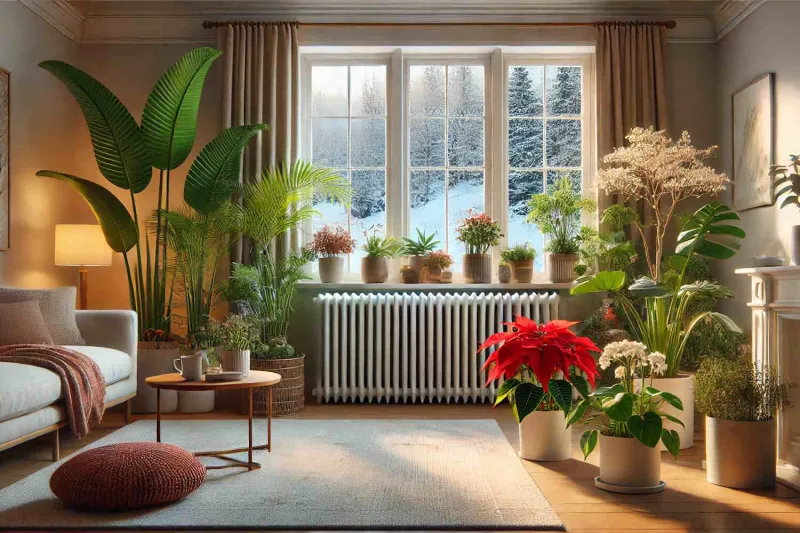
Photo: houseplants near radiator winter dry air home interior, via greentechnologyinvestments.com
Every January, the same two things happen in American homes. The heating system kicks into overdrive, and somewhere nearby, a calathea starts curling its leaves like it's got a secret to keep.
These aren't unrelated events. Your furnace and your houseplants are locked in the same fight — against cold air sneaking in and hot air blowing out — and if you're only paying attention to the thermostat, you're missing half the story.
The Dry Air Problem Nobody Warns You About
Here's the thing most plant care guides bury in a footnote: houseplants don't usually die in winter from cold. They die from the heat.
Forced-air systems — the kind humming in most US homes — push out air that's bone dry, often in the 20-30% humidity range when tropical plants want 50% or higher. Your furnace runs, the air dries out, your plants transpire faster trying to cope, and suddenly that fiddle-leaf fig is dropping leaves like it's autumn inside your living room.
Radiators and baseboard heaters pull the same trick, just more slowly. The air immediately above them turns into a convection oven, and any plant sitting in that zone is essentially slow-roasting.
And here's the kicker: the same dry air that's stressing your plants is a sign your heating system is working overtime. Cracked air, static shocks, and a struggling pothos are all symptoms of a house that's leaking warm air out and pulling cold, dry air in.
The Two-Foot Rule (and Other Placement Fixes)
The fastest, cheapest intervention in your whole plant care arsenal: move things.
Give heat vents a two-foot buffer. Anything closer is getting blasted. If your plant collection has colonized the radiator top (no judgment — it's prime real estate), relocate them for the season. A plant stand a few feet away gets similar light without the scorch.
Mind the windowsill too. That sunny sill is great light, but in an older drafty window, nighttime temperatures can drop ten degrees or more right at the glass. Cold, wet roots are a recipe for rot. If the glass frosts over, pull tender plants back at night.
Rotate weekly. Winter light comes in low and from one direction. A quarter-turn each week keeps plants from leaning into a lopsided stretch.
Humidity: The Two-Birds-One-Stone Move
Now for the part that ties the whole winter mess together. Boosting humidity around your plants doesn't require a plug-in humidifier running eight hours a day — which, depending on your local rates, can add real money to a monthly bill.
Try these instead:
- Cluster your plants. A group of plants creates its own microclimate, breathing moisture on each other. It's free, and it looks great.
- Pebble trays under your most dramatic plants. A saucer of water and stones under the pot adds local humidity as it evaporates. Just keep the pot's drainage holes above the waterline.
- Move moisture where it already exists. Relocating a fern near the kitchen or bathroom — rooms that naturally run humid — can be the difference between thriving and crispy.
- Water in the morning. Plants take up moisture more efficiently early, and you avoid soggy soil sitting cold overnight.
Seal the Leaks, Save the Jungle
The dry-air problem and the high-bill problem share a root cause: your home is exchanging inside air for outside air faster than it should. Fixing that helps everything.
A few weekend-warrior moves:
- Draft snakes or rolled towels along exterior door bottoms — five minutes, zero dollars if you're crafty.
- Clear window film kits from any hardware store. They're cheap, removable, and renters can use them guilt-free.
- Outlet gaskets on exterior walls. Sounds silly, works surprisingly well.
- Close vents in unused rooms — but never close all of them; your system needs balanced airflow.
Every leak you seal means your furnace cycles less, the air stays less desert-dry, and your plants stop living in a wind tunnel.
A Winter Rhythm Worth Keeping
Winter plant care isn't complicated — it's just different. Less water (plants are resting), no fertilizer until spring, and a sharp eye on placement now that the heat's running.
Do a quick lap of your house this week. Find the plants hugging a heat vent, the ones shivering on a drafty sill, and the ones gasping in bone-dry air. Shuffle them, cluster them, throw a towel under the door.
Your fern will thank you. So will your utility bill — and when spring rolls around, you'll have a jungle that's ready to grow instead of one recovering from the season.