Leaf Talk: What Your Houseplants Are Begging You to Fix
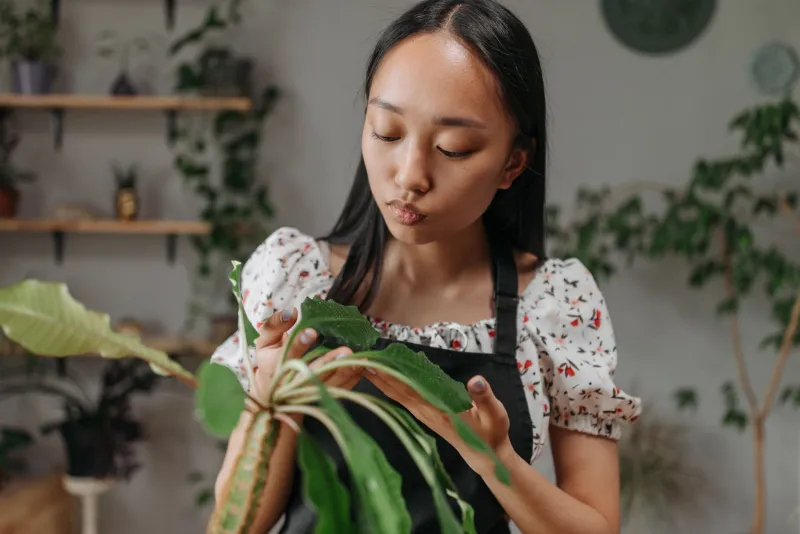
Every plant parent has been there: you walk by your pothos one morning and notice a yellowing leaf. Then another. Before you panic-buy fertilizer, fertilizer, and more fertilizer — slow down. Your plant is communicating with you, and most of the time the fix is free.
Think of yourself as a plant detective. The clues are all in the leaves.
Yellow Leaves: The Classic Cry for Help
Yellowing leaves (botanists call it chlorosis) usually point to overwatering. If the soil feels soggy a day or two after watering, ease up. Let the top inch or two of soil dry out before your next drink.
But yellow leaves can also mean a nutrient gap — especially nitrogen — or simply an aging leaf doing its natural retirement thing. If it's just the oldest leaf at the base and the rest of the plant looks happy, don't sweat it.
The natural fix: Adjust your watering schedule first. Only supplement with a gentle organic fertilizer if the problem persists.
Droopy Stems: Thirsty or Drowning?
Here's the tricky part: both underwatering and overwatering cause drooping. The soil test settles the debate. Bone-dry soil? Give it a thorough drink and watch it perk up within hours. Soggy soil? Your roots may be suffocating — check that your pot has drainage holes and consider repotting in a chunkier mix.
Crispy Brown Edges: It's a Humidity Thing
If you're running your furnace all winter (hello, Minnesota and Colorado readers), the dry indoor air is likely the culprit. Tropical plants like calatheas and ferns crave humidity.
The natural fix: Group plants together, place a tray of pebbles and water beneath pots, or invest in a small humidifier. Misting feels satisfying but offers only fleeting relief.
Leggy, Stretchy Growth: Chasing the Light
When a plant produces long gaps between leaves and leans dramatically toward the window, it's literally stretching for more light. Move it closer to a bright window or rotate it weekly for even growth.
Pale, Washed-Out Leaves: Too Much Sun
The opposite problem — bleached, scorch-looking patches — means your plant is getting cooked. Pull it back a few feet from that south-facing window or add a sheer curtain.
Why Plant Parenthood Is the Ultimate Green Upgrade
Beyond the joy of watching new leaves unfurl, a thriving indoor jungle genuinely improves your home. Plants help moderate humidity, connect you to the rhythms of nature, and — let's be honest — make any room feel instantly more alive. And every healthy houseplant is one less plastic décor purchase, one more reason to skip the chemical air fresheners.
The best part? Once you learn to read the signals, plant care becomes intuitive. You'll catch problems early, fix them naturally, and build confidence with every recovery. Your plants are talking. Now you know how to listen.