Before You Buy New: The Case for Secondhand Decor and How to Revive It Right
Here's an uncomfortable truth the home decor industry would rather not discuss: a brand-new 'eco-friendly' bookshelf, shipped across the country in plastic wrap, often has a bigger footprint than the solid oak one sitting unloved at your neighborhood estate sale.
We've been sold the idea that sustainability is something you purchase. But the greenest furniture and decor aren't manufactured at all — they're rescued.
The Problem With 'Eco' Fast Furniture
Flat-pack retailers have gotten savvy, slapping 'sustainable bamboo' and 'recycled materials' labels on pieces designed to last a few years, not a few decades. Manufacturing anything — even from renewable inputs — takes energy, water, and often adhesives and finishes that off-gas formaldehyde into your living room.
A secondhand piece, by contrast, has already paid its environmental toll. Every year it stays in circulation is a year its materials don't need to be harvested, shipped, or hauled to a landfill. Americans toss roughly 12 million tons of furniture annually. Every thrifted dresser is a small dent in that number.
Where the Good Stuff Hides
- Estate sales — the gold standard for solid wood furniture at prices that feel like typos.
- Buy Nothing groups — free, hyper-local, and zero shipping emissions. People give away genuinely nice things daily.
- Facebook Marketplace and Craigslist — set alerts for 'solid wood' and 'vintage' in your area.
- Habitat for Humanity ReStore — secondhand home goods that fund a good cause.
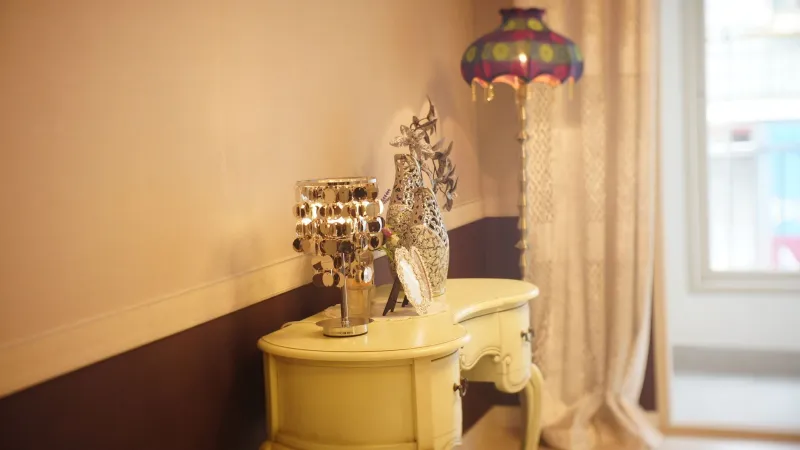
- Library and church rummage sales — underrated for glassware, lamps, and baskets.
How to Spot Quality That Lasts
Run your hand along the drawers. Dovetail joints signal real craftsmanship; staples signal a piece on its way out. Lift it — solid wood has satisfying heft. Check for wobbles (often fixable with a tightened bolt) and sniff for mustiness (often fixable with sunshine). Scratches and scuffs? Those are negotiation leverage, not dealbreakers.
Refreshing Your Finds, the Non-Toxic Way
Secondhand treasures sometimes arrive with a past — sticky residue, mystery odors, decades of dust. Skip the chemical cocktails and raid your kitchen instead:
- All-purpose cleaner: Equal parts white vinegar and water in a spray bottle cuts grime on most hard surfaces. (Skip vinegar on natural stone.)
- Wood polish: A dab of olive oil rubbed with a soft cloth brings tired wood back to life.
- Deodorizing: Leave pieces in fresh air and sunshine for a day. For fabrics, sprinkle baking soda, wait an hour, vacuum.
- Sticky residue: A paste of baking soda and coconut oil lifts label gunk without solvents.
- Upholstery: Steam cleaning with plain water handles most odors; replace cushion covers when possible.
Style Points: Why Old Stuff Just Looks Better
Beyond the environmental math, secondhand decor gives your home something a big-box showroom can't: a story. A 1960s teak sideboard next to a pothos you propagated yourself says more than a cart full of matching new pieces ever could. Your home becomes a collection, not a catalog.
Make It a Habit
Start small. Next time you need a lamp, a plant stand, or a picture frame, check secondhand sources first. Set a personal rule — say, one-in, one-out — and let the thrift habit compound.
The greenest home isn't filled with things that were made sustainably. It's filled with things that never needed to be made again. Thrift, swap, repeat.